Since 1920 · Hiroshima
A Century of Drive
From a cork factory to Le Mans glory and the world's favourite roadster — this is the story of the stubborn little carmaker from Hiroshima that always did things its own way.
Mazda is the smallest of Japan's major automakers, and it wears that underdog status proudly. Too small to out-spend its rivals, it out-thinks them instead: it was the only manufacturer to bet everything on the rotary engine, the only Japanese maker to win the 24 Hours of Le Mans outright, and the company that refused to let the affordable two-seat roadster die. A century on, that independent streak is still visible in every product — from the 9,000-rpm MX-5 to the turbocharged inline-six CX-90.
The company begins life as Toyo Cork Kogyo, a cork manufacturer in Hiroshima. Under Jujiro Matsuda it pivots to machinery, and in 1931 introduces the Mazda-Go, a three-wheeled truck that carries the name "Mazda" — chosen in honour of Ahura Mazda, the Zoroastrian god of wisdom and harmony. The company officially becomes Mazda Motor Corporation in 1984.
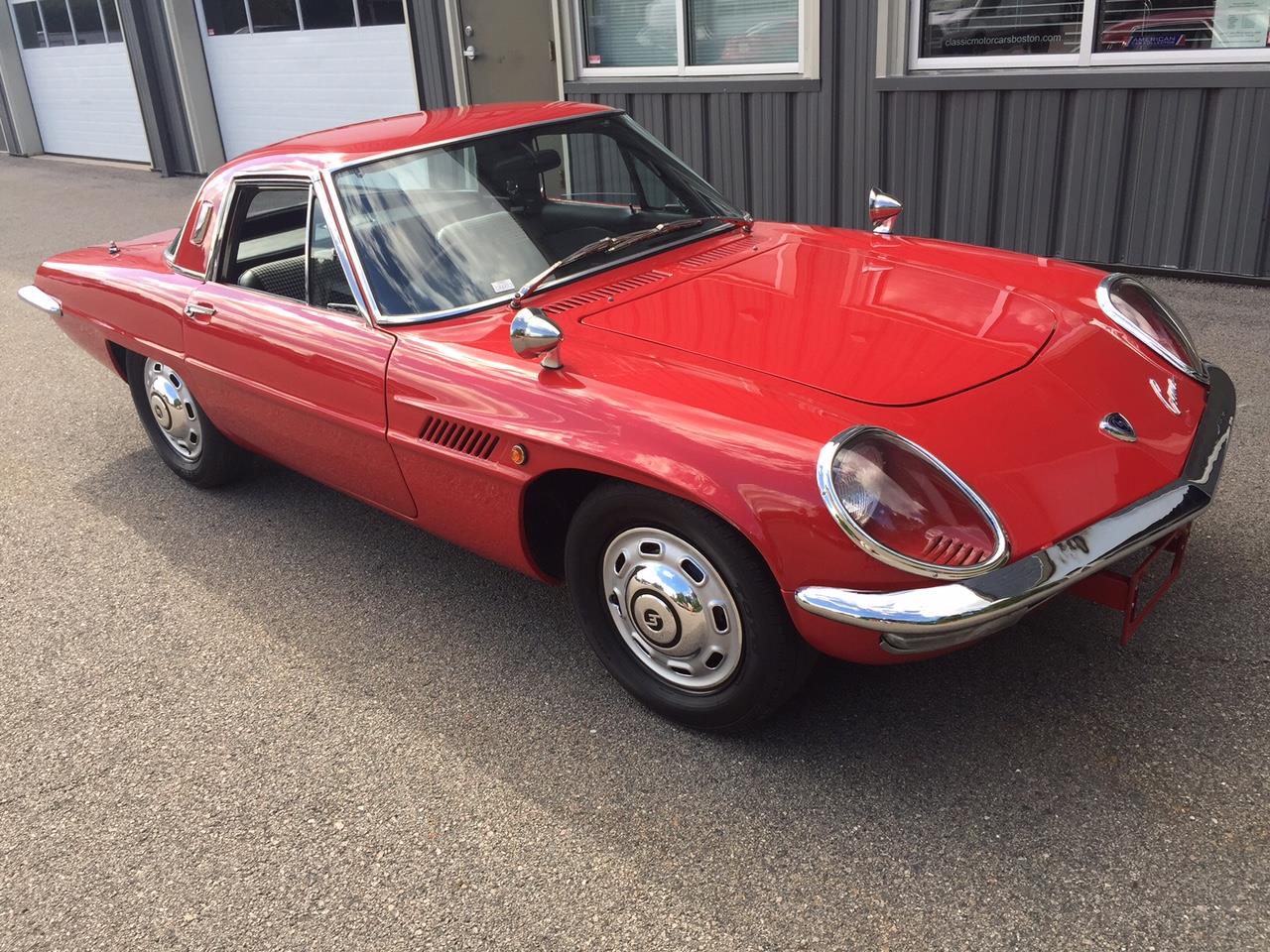
Mazda licenses Felix Wankel's eccentric rotary concept when everyone else gives up on it, and in 1967 launches the Cosmo Sport 110S — the world's first mass-production two-rotor sports car. Only about 1,176 are hand-built, but the car establishes the engineering courage that defines the brand to this day.
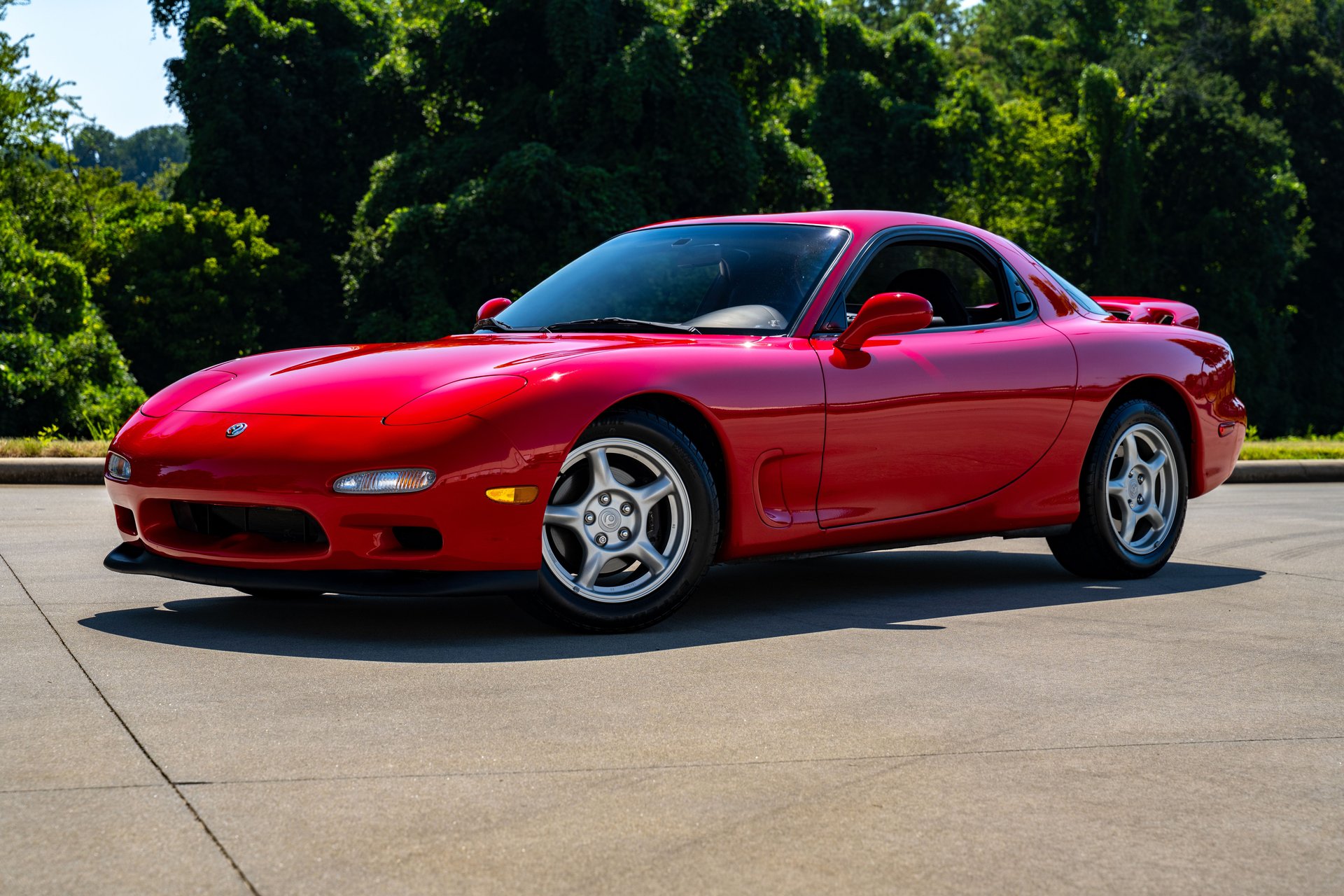
The RX-7 arrives as an affordable rotary sports coupe and evolves through three generations until 2002. The final FD version pairs the twin-turbocharged 13B-REW rotary — up to 276 hp in its home market — with sublime balance, making it one of the most beloved Japanese sports cars of all time.
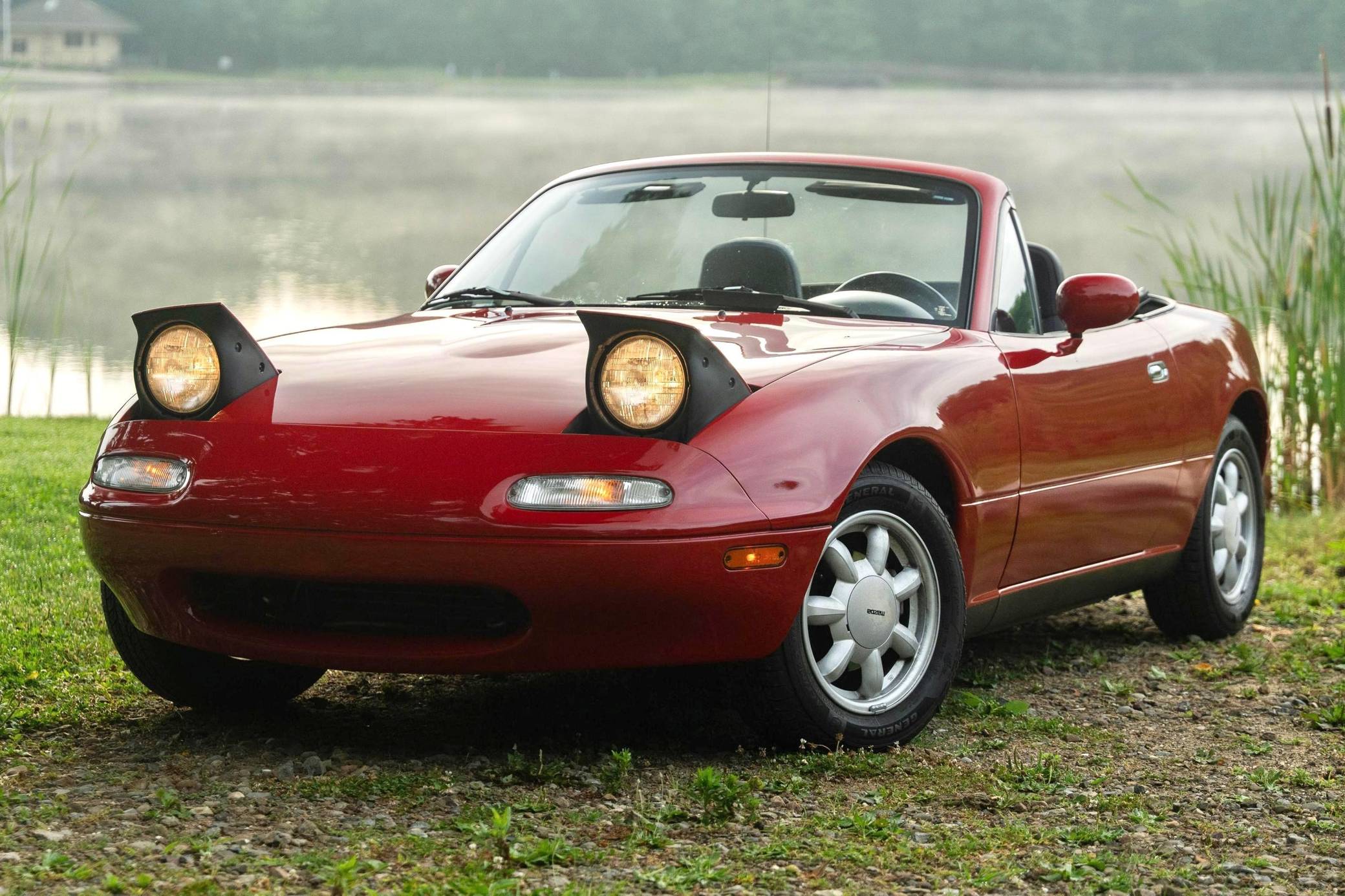
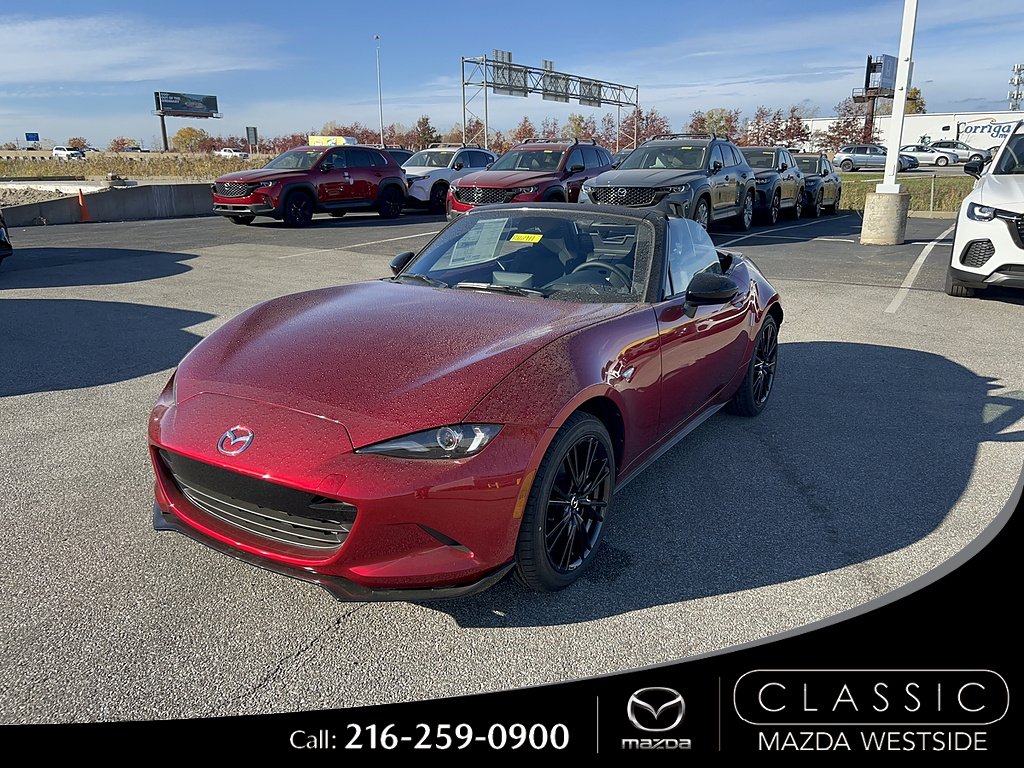
Debuted at the Chicago Auto Show in February 1989, the first-generation MX-5 revives the classic lightweight roadster: 1.6 litres, 116 hp, pop-up headlights and roughly 990 kg. "Jinba Ittai" — horse and rider as one — becomes the development mantra for what will become the best-selling two-seater sports car in history.
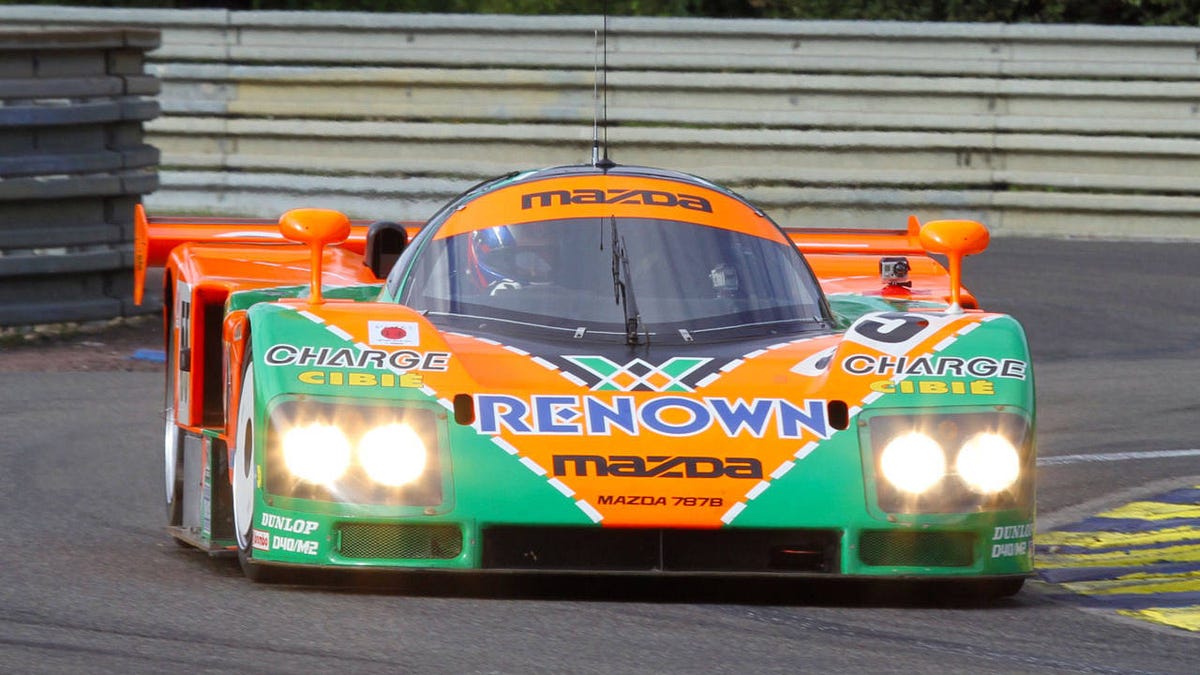
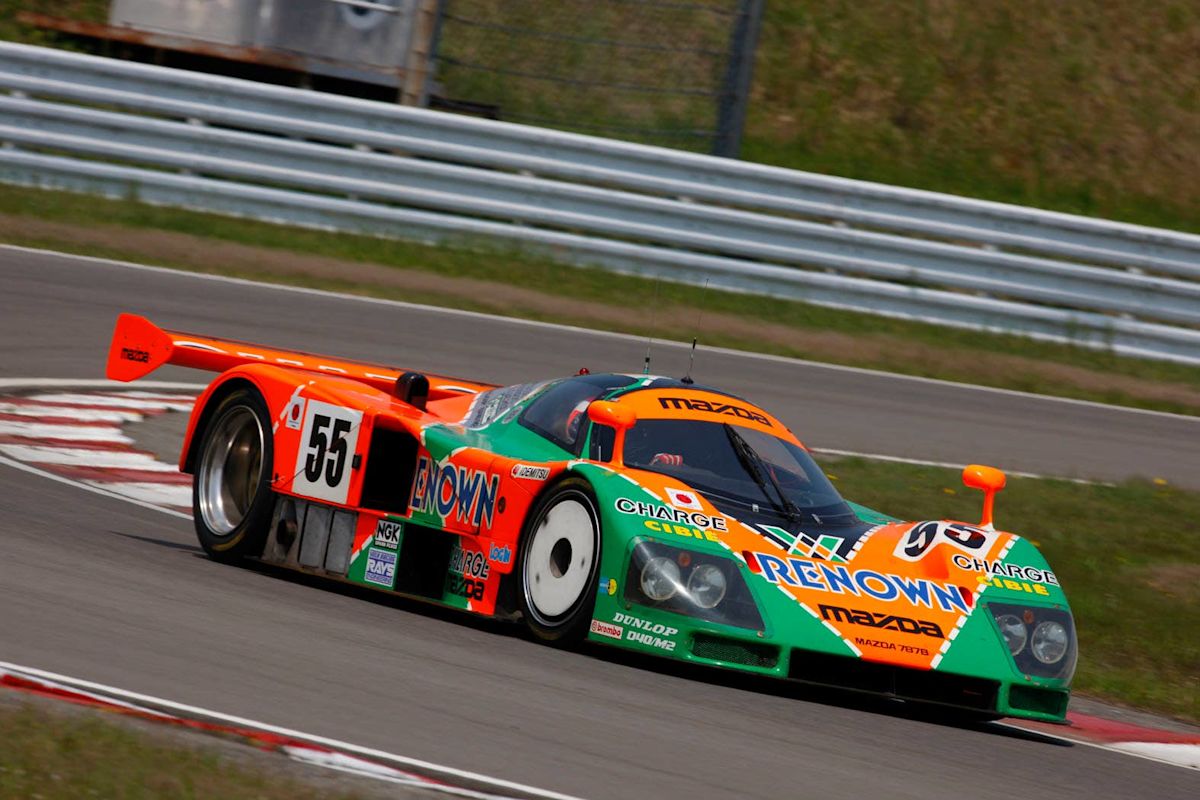
In 1991 the #55 Mazda 787B — powered by a 2.6-litre R26B four-rotor engine of around 700 hp — wins the 24 Hours of Le Mans with drivers Johnny Herbert, Volker Weidler and Bertrand Gachot. Mazda becomes the first Japanese manufacturer to win the race outright, and rotary engines are soon banned from the category — a champion retired undefeated.
Rather than chasing hybrid complexity, Mazda rebuilds the internal combustion engine itself. Skyactiv-G engines run at compression ratios as high as 14:1, while new lightweight Skyactiv bodies, chassis and transmissions cut weight and sharpen response. The 2011 Mazda CX-5 is the first full Skyactiv product, and the technology underpins the whole modern lineup.
The fourth-generation MX-5 lands lighter and sharper than its predecessor, wrapped in the flowing Kodo — "Soul of Motion" — design language that by now defines every Mazda. In 2016 production passes one million units, a Guinness World Record for a two-seat sports car.
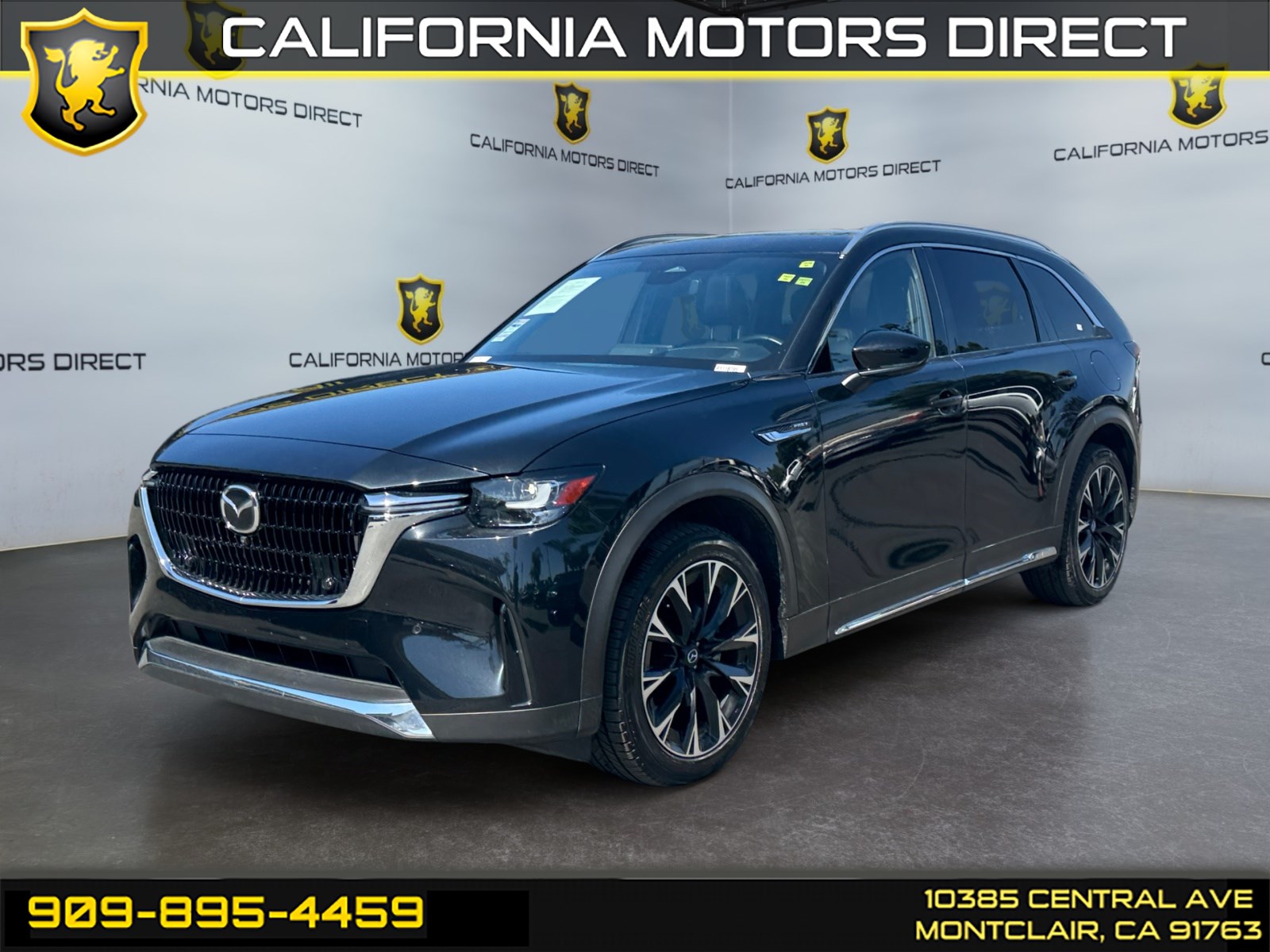
With the CX-90 and CX-70, Mazda returns to a layout it last used decades ago: a longitudinal turbocharged 3.3-litre inline-six, complemented by plug-in hybrid options, i-Activsense safety technology and a premium-feeling cabin across the range. The underdog from Hiroshima now competes with brands twice its size — on its own terms.
The same spirit that built the Cosmo Sport lives in the 2026 MX-5 Miata. Meet the car that carries a century of engineering joy.
Discover the MX-5